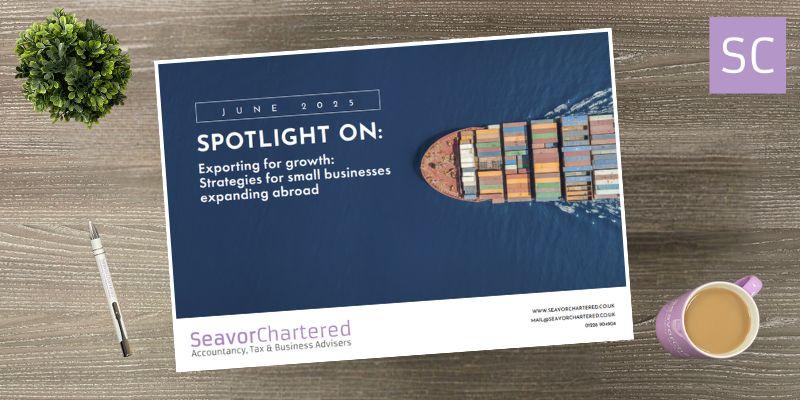
In today’s global economy, exporting offers small UK businesses one of the most powerful routes to sustainable growth, improved profitability, and increased resilience. While the 2024 Autumn Statement set a national target of £1 trillion in exports by 2030, the real impact will come from the thousands of owner-managed firms that decide to make their first overseas sale — whether to Dublin, Dubai, or Denver.
At SeavorChartered, we understand that exporting can feel like a big step, but it’s rarely speculative. In fact, 22% of UK firms with 10 or more staff exported goods, services, or both abroad in the 12 months to April 2025, with another 9% planning to start within the next year (source: Office for National Statistics).
Modern tools like cloud accounting, predictable customs processes, and direct-to-consumer platforms make it easier than ever to trade across borders.
You can now download our free guide by clicking on the link below:
Exporting strategies for small businessesThis comprehensive guide provides step-by-step advice for small business owners considering their first overseas sale or expanding existing exports. It covers:
- Assessing financial readiness
- Tax and compliance frameworks for 2025/26
- Currency and cashflow management
- Market selection and risk evaluation
- Practical steps to get started
Why exporting matters for SMEs
Exports are more than just a sales opportunity; they offer access to larger markets, the potential to lower unit costs through increased volumes, and greater resilience against domestic slowdowns. For example, the value of UK goods exports rose by £1.8 billion (6.3%) in January 2025 compared with December 2024 — a clear sign of growing appetite.
Are you ready to export?
Before quoting to an overseas buyer, review your turnover stability, free cashflow, and management capacity. Key considerations include:
- Can your business fund longer payment cycles and increased inventory?
- Do you have the time and resources to handle customs paperwork, language differences, and after-sales support?
- Have you protected your intellectual property in the target market?
Understanding tax and compliance
Exporting brings added tax considerations. For 2025/26, the small profits rate of 19% applies to profits up to £50,000, with the main rate at 25% above £250,000. UK VAT rules require careful attention to evidence of export, and you may need to register for local VAT in some cases, particularly if supplying digital services to EU consumers under the non-Union OSS scheme.
Managing cashflow and currency risk
One delayed payment in a foreign currency can affect your cashflow. Our guide covers tools like multi-currency accounts, forward contracts, and export credit insurance to help protect your business.
Public and private support programmes
From the UK Export Finance (UKEF) general export facility to the Growth Guarantee Scheme and the Internationalisation Fund, multiple schemes can help reduce upfront costs and manage risk.
Putting it into practice
Exporting is more structured and achievable than many business owners think. With the right preparation — including cashflow forecasts, VAT compliance, and clear export plans — your business can move confidently from interest to sustainable overseas revenue.
Download our guide today: Exporting for Growth: Strategies for Small Businesses Expanding Abroad
At SeavorChartered, we’re here to help you navigate every step of the export journey. Call us on 01228 904904 or email us at mail@seavorchartered.co.uk to discuss your export plans.