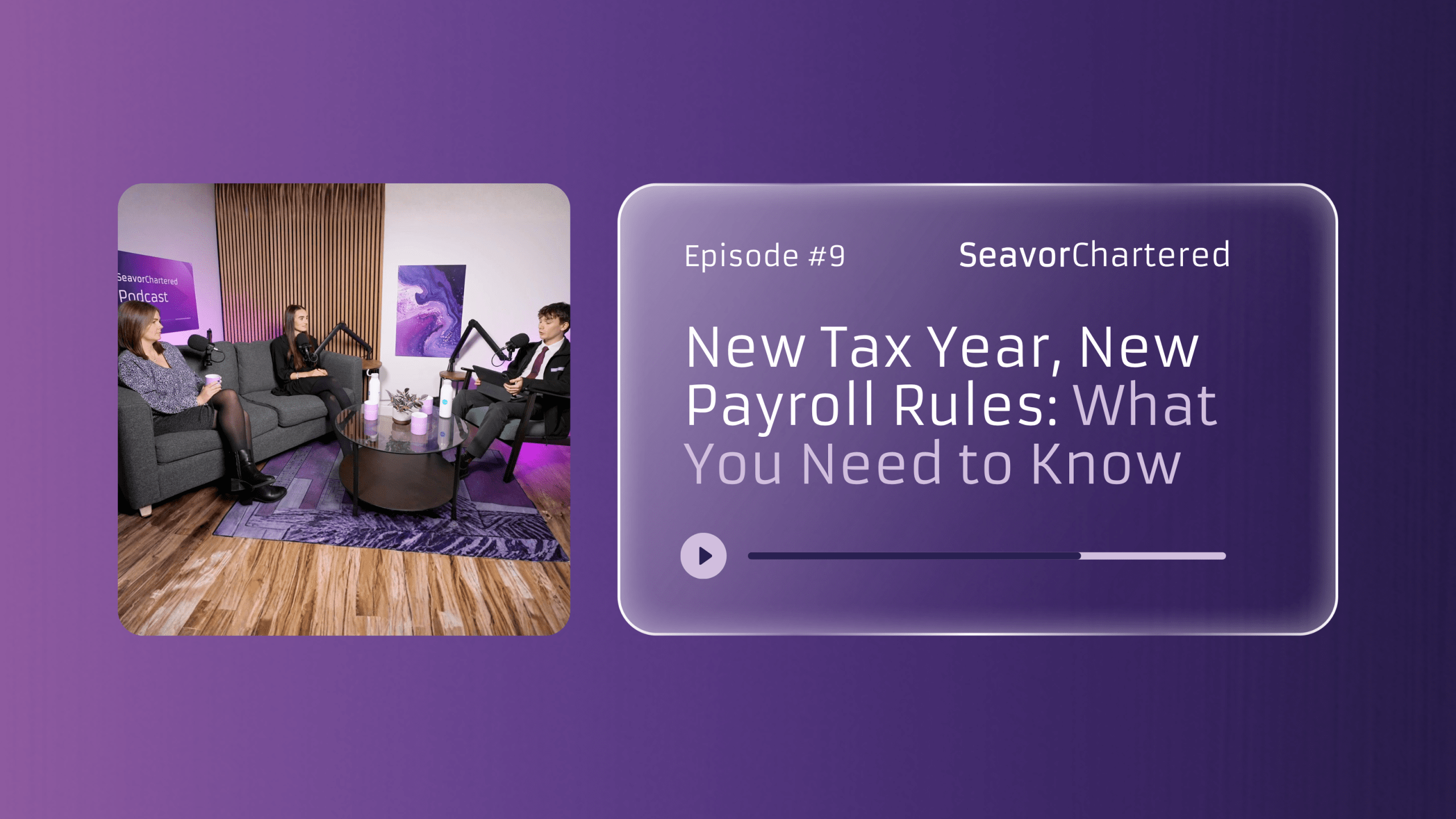
With the start of a new tax year comes a range of payroll changes that employers need to be aware of.
In our latest podcast, Charlie is joined by Helen and Francesca to talk through the key payroll updates for 2026/27 and what they mean for both employers and employees.
From increases in National Minimum Wage to tax code changes, statutory pay updates and the risks of getting payroll wrong, this episode highlights why payroll is about far more than simply paying staff each month.
You can watch the full conversation on YouTube here: https://www.youtube.com/watch?v=COWCHtH8XYE
National Minimum Wage increases from April 2026
One of the biggest payroll changes at the start of every tax year is the increase in National Minimum Wage and National Living Wage rates.
Francesca explains that while these increases are announced in advance, they can still have a significant impact on employers’ costs.
As discussed in the podcast, an employee working 37.5 hours per week on minimum wage could cost an employer an additional £1,154 per year from April 2026 once wage increases, employer’s National Insurance and pension contributions are taken into account.
It is not just about the hourly rate
A key point raised in the discussion is that National Minimum Wage is not always as straightforward as many employers think.
It is not simply a matter of checking the hourly rate on paper.
Other factors can affect whether minimum wage rules are being met, including:
- Time spent in meetings outside normal working hours
- Mandatory training
- Salary sacrifice arrangements
For example, if an employee is participating in a salary sacrifice scheme, their pay after the sacrifice must still remain above the minimum wage threshold. This is an area that can easily catch employers out if it is not monitored properly.
Why tax codes often change at the start of the tax year
Another issue many employees notice in April is a change to their tax code.
As Francesca explains, the standard tax code of 1257L is common, but that does not mean any different code is automatically wrong.
Tax codes can change for a range of reasons, including:
- Estimated earnings from previous years
- Changes in benefits or allowances
- Adjustments for other income such as savings interest
- Employment expenses or reliefs that HMRC has included
The important thing to remember is that payroll providers and employers do not usually choose or amend tax codes themselves. These are issued by HMRC based on the information they hold, and sometimes that information is out of date or based on estimates.
That is why employees should check their payslips regularly and make sure their tax code looks appropriate for their circumstances.
Why checking your tax code matters
A recurring theme in the podcast is that employees need to take some responsibility for checking their own tax position.
If a tax code looks unusual, it is worth reviewing it rather than assuming it must be correct.
In many cases, the best way to do this is through a personal Government Gateway account, which can help show how HMRC has worked out the code and whether the figures being used are accurate.
For self-employed individuals where we act and have HMRC authority in place, it is often possible for us to speak to HMRC and help get tax codes updated where necessary. That can be particularly useful if a code is based on outdated expenses or estimates that no longer apply.
Statutory Sick Pay changes
The podcast also covers changes to Statutory Sick Pay, which could have a real cost impact for employers.
Previously, there was a three day waiting period before Statutory Sick Pay became payable. Under the new rules discussed in the episode, Statutory Sick Pay now begins from day one of sickness.
This is an important shift because, unlike some other statutory payments, sick pay is generally funded by the employer rather than reimbursed by the government.
That means even short periods of sickness absence may now create a direct additional cost for employers.
Changes to parental pay entitlement
Another notable update relates to paternity pay.
As highlighted in the discussion, employees previously needed a longer period of service to qualify. Under the new rules, eligibility can begin from day one of employment. This is a significant change and one that employers need to be aware of, particularly when taking on new staff.
It is another example of why payroll cannot simply be viewed as an admin task. Rules change regularly, and missing those changes can create problems for both businesses and employees.
Payroll is not just an admin job
One of the clearest takeaways from the podcast is that payroll involves much more than processing wages.
There are many moving parts behind the scenes, including:
- Starters and leavers
- P45 information and year to date figures
- RTI submissions to HMRC
- EPS submissions
- Pension compliance
- Statutory payments
- Filing deadlines
- Holiday pay calculations
- HMRC liabilities and interest risks
If payroll is handled incorrectly, the consequences can go far beyond a simple mistake on a payslip. Employees may lose trust, submissions to HMRC may be wrong, liabilities may be misstated and businesses may increase their risk of a compliance check.
Why outsourcing payroll can make sense
For many business owners, payroll is something that gets pushed to the end of a busy week. But as this episode makes clear, it is not something that should be treated as a quick Friday afternoon admin task.
Outsourcing payroll to professionals can help ensure that:
- employees are paid correctly
- deadlines are met
- tax codes and statutory payments are handled properly
- pension obligations are kept up to date
- HMRC submissions are filed accurately and on time
It also allows business owners to stay focused on running their business, rather than spending valuable time trying to keep up with constantly changing payroll rules.
In summary
The new tax year has brought a range of important payroll changes, and employers need to make sure they understand how these updates affect their business.
From minimum wage increases and tax code issues to statutory pay changes and compliance risks, payroll is an area where mistakes can be costly.
Getting it right helps protect your business, supports your employees and reduces the risk of unnecessary problems with HMRC.
🎧 To hear the full discussion and get practical insight from our team, watch the full podcast episode here: https://www.youtube.com/watch?v=COWCHtH8XYE